Friday, 7 October 2016

THE UFFE ELBAEK MODEL

Lazysalesxpert Julie SulterHOW TO GET TO KNOW YOURSELF

If you want to gain a general understanding of yourself and others Uffe Elbaek public opinion barometer is a good starting point. It reveals behavioral traits and tendencies.

You should bare in mind we are always subject to four different perspectives.
How do you see yourself?
How you would like to see yourself?
How others see you?
How others would like to see you?

Proceed as follows: Without taking time to think about it, decide on the following: On a scale of one to 10, how much of a team player are you and how much of an individualist?
Do you pay more attention to content or form?
What is more important to you, the body or the mind?
Do you feel more global than specific?

Now take a different coloured pens and mark on the scale how you would like to see your self.
Define your own axes.


Wednesday, 5 October 2016

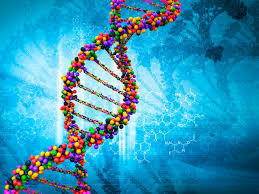
WHY GENES RULE


Lazy salesxpert Julie SulterFollowing the successful decoding of the Human Genome in 2001, molecular biology was raised to the status of singular secular religion by many. And yet today it cannot boast much success, cures for cancer and depression remain a utopian dream because of the relationship between genes and the environment has proven to be more complicated than initially assumed. And yet it is conceivable that in the future we will no longer turn to a psychoanalyst or confession in search for self knowledge, but rather complete sequencing of our personal genome.

Possible consequences of increasing geneticisation:

Positive genetics: Prenatal and pre-implantation not only mean genetic disease will die and also prevent existence of genetically abnormal people. (In Denmark the number of Down syndrome babies being born has gone down by 50% since the introduction of screening throughout the country).

CSI realities:
DNA databases simplify the (worldwide) search for criminals.

New customer structure and health insurance: 
Classified according to customers molecular makeup.

Personalised medication:
Ingredients are chosen on the basis of a persons individual biochemistry.

New Class Society
US molecular biologist Leanne M. Silver (authour of controversial book 'Remaking Eden'), predicts the division of society into 'natural', 'gene-enhanced' and 'gene-rich' people. The 'gene-rich' about 10% of the worlds population will no longer interbreed with the 'naturals'.

The end of solidarity
When social problems have their origins in a persons biological make-up,would the state and society no longer be responsible for social conditions?

Personal responsibility 
The Genome debate reveals a paradoxical simultaneously of determinism (gene dictate your life) and personal responsibility (those who have a predisposition predisposition for cancer they themselves are responsible for trying to prevent it).

Discovering an IQ gene 
If such a gene could be found us sociologists Thomas lemke, would not the notion of the inherent equality of all humans become obsolete, as there would no longer be a 'natural foundation' for it?
Would we abolish human rights? And above all: who would we be?

And also: finding the 'missing link'
Through the hybridization of chimpanzee DNA human DNA it will be a kind of rebirth of the australopithecus. The first pre-human.

We are not equal to the perfection of our products. We are producing more than we can answer for. We also think we are allowed to do what we're doing. Gunther Anders

Monday, 3 October 2016

WHY COMPUTERS ARE OVERTAKING US


Lazy salesxpert Julie SulterThe answer can be found in the acronym CPU (Central Processing Unit). In 1965 Gordon Moore made a prognosis that still applies today, the number of transistors in a CPU doubles approximately every 24 months. In other words computers became twice as fast every two years. 
Lets look at the inner workings of a computer: imagine the main storage as a warehouse, it is the computer's long-term memory. The RAM (Random Access Memory) it the short term memory and the CPU is a processor that stores new and retrieves old data. The difficulty is not in storing more information, the warehouse can be enlarged if needed, but in processing it.  The increased CPU performance means that we can now watch videos on a mobile phone. Not so long ago we could only write text messages, now smartphones are supposed to be able to do everything at once with the result that just like PC they can crash. The technology experiences an information overload.

Moore;s theory is not  a law of nature. The most important question is: is there a limit to a computers performance? Yes, says Moore. No, says the futurist Ray Kurzweil: in 2049 you will be able to buy a computer for $1,000 with a processing power equivalent to the brain capacity of living people. What does this mean? 

'I was surprised by it's human abilities' Garry Kasparov, after he lost again the chess computer Blue Deep in 1997

Sunday, 2 October 2016

WHICH INDISTRIES STIMULATE ECONOMIC GROWTH


Lazy salesxpert Julie SulterAccording to Russian Economist Nikolai Kondratieff the global economy develops in overlapping cycles or 'long waves'. To start of each of these waves is a basic innovation i.e. an innovation that causes a fundamental structural change and influences the whole of society. The new technology is invested in for forty to sixty years and thereby stimulates the economy, until the mode of production reaches it's limits and there is no more growth. The search begins for a new innovation which heralds the next cycle.
The first Kondratieff was triggered by the invention of the steam engine and innovations of the textile industry. Steel and the invention of the railway marked the second Kondratieff. These two cycles were dominated by Great Britain. The third Kondratieff, electrical engineering and chemical industry was dominated by Germany and America. During the fourth Kondratieff the automotive and petrochemical Industries, the USA established itself as a global power. It was the Apex of industrial society. The oil crisis marked the changeover from an industrial zone to an information society: The fifth Kondratieff. With the global recession of 2001 2003, the sweeping potential of this technology declined. At the same time the six cycle was being established: the health market including biotechnology and psychosocial sector (eg therapies) as well as environmental technology. Here's Leo A Nefiodow, and expert on Kondratieff cycles, on the sixth cycle: The health cycle isnt really about health care, it is just called this. More than 97% of the financial capital is spent on research into and diagnosis therapy and management of diseases. In fact it's an illness cycle.
The length of the cycles their triggers as well as their impact are contentious. An important indicator for judging a Kondratieff cycle is volume of work that it generates. In developing countries the industry is creating as many new jobs as the health sector.

'I think that nowadays it is health, not sex that acts as a form of moral ie social control. It's all about controlling the body: staying slim, staying fit, eating properly'. Paul Strasburg

Saturday, 1 October 2016

WHY CHANGE


Lazy salesxpert Julie SulterChange is generally welcomed or at leased regarded as inevitable. But is this really so? just an example, why is a year in which company earned the same as the before regarded as unsuccessful? While searching for answers we came across this model by blogger Jessie Hagy.

The similarities between the way things are (A) and the way things will be (B) are often greater than expected (C). In other words even following big changes, much stays the same.

But the model can also read differently: Professor Philipp Zimbardo believes there are three categories of people who can be defined according to which 'time zone' they live in:

Focused on the past: 'Past Negative' those who define themselves according to their misfortunes and missed opportunities in the past and 'Past Positives' (those who are nostalgic and romanticise the past).
Focused on the present: 'Headonist's' (those searching for happiness) and 'non-planners' those who believe in fate, for whom the future cannot be planned. e.g because of religion or class affiliation).

Focused on the future: 'Planners' (Life is what you make it) and 'After-lifers' ('real' life begins only after the body has died)
In the Western world the vast majority of people are focused either on the 'past' or the 'future'.

So is C always getting smaller because we are too preoccupied with A or B?

'If I ain't broke, don't fix it'

WHAT 'IT' IS


Lazy salesxpert Julie SulterAs we discovered with Moores Law, there are signals that computers could surpass the human brain and evolve into a kind of artificial intelligence. The point at which this will happen is called 'technological singularity'. Some people say it is the moment at which machines will gain the upper hand.

The more we use it, the more it learns. The more it learns, the more we use it. It's omnipresent, it is all around it in-prisons our minds, it is supposed to distract us from the fact we are trapped. It knows where we are and knows where we were, it knows more or less what we are thinking. When it was created it was not seen as intelligent, because it is made up of codes and doesn't have a body, it is faceless. Because there are a million ways of accessing it, it is hard to say where it is. And because it is a combination of our intelligence and an alien digital memory it is hard to say what it is. 

It will change everything. It is hard to explain what it is, you have to experience it for yourself.

(compiled from text by Kevin Kelly, Ray Kurzweil, Eric Schmidt, Andy and Lana Wachowski)

WHY THE SMALL FISH ARE OVERTAKING THE BIG FISH


Lazy salesxpert Julie SulterHow can I make more money? is a question all company managers ask themselves. One they don't understand themselves enough is: 'Have I missed out on a new development?' So argues Harvard Economist Clayton Christensen, who investigated by industry leaders usually miss the boat when it comes to developing groundbreaking innovations. His work is considered a milestone in economic research Christensen distinguishes between s'ustainable innovation' the improvement of existing products that are designed to keep prices and margins high and 'disruptive innovation', the lauching of new products and typically simpler, faster, cheaper. In most cases established companies trying to improve successful products that already meet more than the customers needs. Christensen calls it 'overshooting': the managers of a company producing a product have no idea why their product is so popular and ignore what customers really want in favour of adding yet more non essential features. For eample, who ever never uses all the features in Microsoft Word?

Because these companies focus on their existing markets rather than developing new products they don't see the threat of disruptive innovations coming from below. As a result they overlook disruptive innovation ganes a share of the market and eventually end up replacing the previously leading product.
I don't know if it gets better or if it's different. But it has to be different to be good 
Georg Christoph Lichtenberg